Part Four — The Supply Chain
Genuine single-donor hair primarily comes from Eastern Europe and parts of Western Asia — regions where a well-established culture of hair sale exists. Donors are fully aware that their hair has commercial value. They sell it intentionally, they are paid a price they have often negotiated themselves, and they understand exactly where it is going.
Last Updated: 22 July 2026 ■ 2 min read
Where the Hair Comes From
Genuine single-donor hair primarily comes from Eastern Europe and parts of Western Asia — regions where a well-established culture of hair sale exists. Donors are fully aware that their hair has commercial value. They sell it intentionally, they are paid a price they have often negotiated themselves, and they understand exactly where it is going.
The hair is collected by specialists called collectors, who build long-term relationships with donors and assess each ponytail individually before purchase. The best collectors work exclusively in the premium segment — selective in ways that volume-driven buyers cannot afford to be. They sell individual cuts directly to specialist stylists, not in bulk to factories.
Rare Categories and Why They Cost More
Not all single-donor hair is equally available. Certain combinations of texture, colour, and length are genuinely rare, and their pricing reflects that scarcity directly.
Lighter textures
- Natural blonde Slavic hair — fine, silky, and relatively scarce even within Eastern European sourcing networks
- Natural blonde Slavic hair that is also wavy or lightly curly — an exceptionally rare combination
- Very fine, light hair from younger donors — child-fine texture with exceptional softness
Afro and coily textures
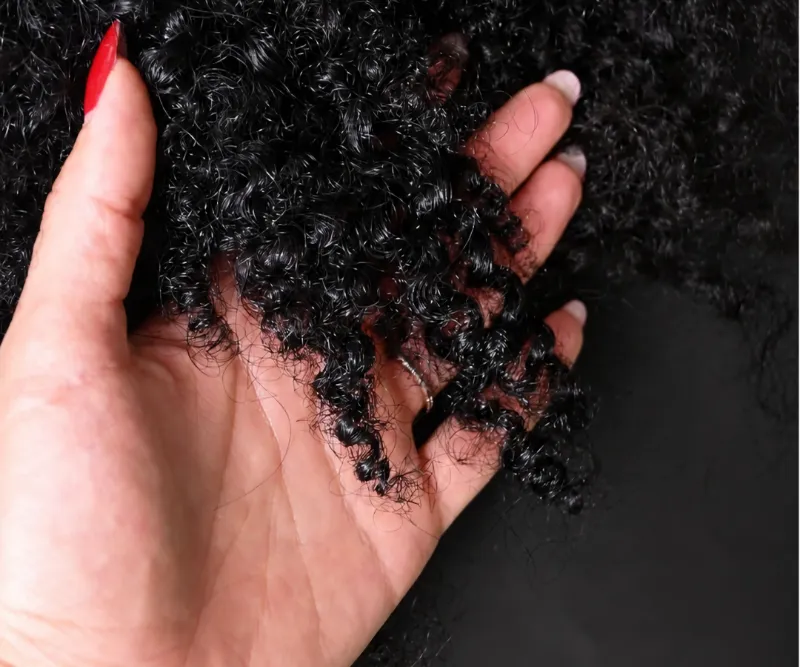
- Tightly coiled Afro-textured hair in significant lengths — from regions where donor culture is far less developed than in Eastern Europe
- Fine, densely coiled textures — among the most difficult categories to source globally
When hair from these categories is found, it is a singular event. It cannot be reordered or replaced. This is why the pricing of rare hair categories is not comparable to anything in the conventional extension market.
What Makes a Ponytail Truly Premium
- Completely split-end free throughout the entire length
- Verifiably unprocessed — not just claimed as such
- Excellent density from root through to the tips — not front-loaded thickness that thins at the ends
- Well maintained by the donor — care habits are written into every strand